Projects
Our Project Support
Impact of Covid-19 lockdown and ENDS ban on tobacco and nicotine use in India
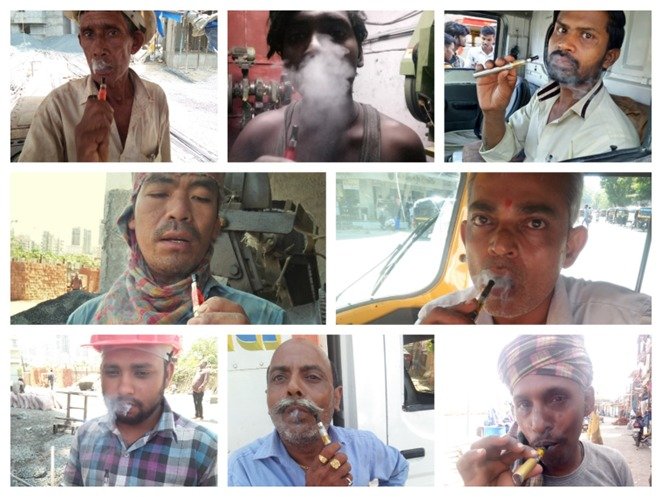
This study of 3,005 participants across eight metros — Ahmedabad, Bengaluru, Chennai, Delhi, Hyderabad, Kolkata, Mumbai and Pune — aims to understand the behavioural changes and coping mechanisms among tobacco and e-cigarette users resulting from recent bans — the two-month pandemic lockdown and the e-cigarette (ENDS) ban of late 2019. HRPR has put together a team of data collection agencies and researchers for the study, after which media firms will be engaged to disseminate the research among lawmakers, policy experts, medical professionals and the public, so that adequate response measures can be adopted.
Authored by Debjani Banerjee, Hardeep Kaur and Sandeep Bhardwaj, the study found daily consumption fell furthest among smoking-tobacco users during lockdown (44.3%), compared to smokeless-tobacco users (27.3%) and e-cigarette users (20.9%) — the smallest of the three. Because the ENDS ban had already cut off vapers from a safer alternative just as the pandemic hit, the study flagged this group as being at heightened risk of relapsing to combustible or smokeless tobacco.
The study was published in Journal of Development Research (read the paper). As with any research HRPR takes on, publication wasn't the end point — the findings were also actively disseminated to lawmakers, policy experts and medical professionals through targeted media outreach, ensuring the work reached the people positioned to act on it.
Developing snus as an effective harm reduction solution for India's 200 million SLT users
An intervention, development and research project. This year-long project aims to address the following:
- Intervention study: Can snus be an effective harm reduction alternative for India's smokeless-tobacco (SLT) users? If yes, this can be expanded to include bidi smokers at a later stage.
- Development project: Can snus be made locally, and at price points that make it a viable alternative?
- Research project: There is currently no Indian research on the effectiveness and harm reduction potential of snus. A scientific evaluation, along with toxicological testing of locally produced snus, can make a strong case for adopting a snus intervention.
Building the advocates, not just the arguments
HRPR has been instrumental in advancing consumer advocacy and sensitisation of medical professionals by helping set up two dedicated advocacy organisations in India. These organisations and their leaders are at the forefront of the tobacco harm reduction debate in the country, engaging in public debates on the issue, making representations to policymakers, countering misinformation, and sensitising stakeholders which include consumers, medical fraternity, lawmakers, legal counsel and business professionals.
Putting frameworks in front of lawmakers
HRPR has researched and drafted policy proposals, including detailed frameworks for tobacco harm reduction (THR) adoption in the context of developing nations. Our policy proposals are routinely read and reviewed by policymakers, and quoted in media. Some of our proposals have been cited in the Indian Parliament during debates, and are widely circulated among lawmakers and research communities — turning position papers into part of the actual policy conversation, rather than documents that sit unread.
Getting the right people in the same room
HRPR has organised numerous roundtables, seminars, webinars, speaker events, roadshows, educational events, engagements with policymakers, and press conferences — managing the end-to-end logistics and post-event follow-ups with relevant stakeholders, including media publicity. These events bring researchers, clinicians, regulators and consumer groups into direct conversation with each other, and are often where a position paper first turns into a real policy discussion.
Turning research and policy positions into press
HRPR has built and maintained a substantial earned-media footprint for tobacco harm reduction, in India and internationally. This includes placing op-eds in outlets such as Filter, 2Firsts, Tobacco Reporter, Outlook India, Daily Pioneer and the Times of India; securing quotes and citations in global press including The New York Times, Reuters and Livemint; and appearing in video interviews and podcasts including GFN·TV. Our founder is also a regular go-to source for journalists covering nicotine and tobacco policy in South Asia.
This capability extends to any research or policy work commissioned through HRPR: findings and positions are proactively pitched to relevant media, so outputs reach the policymakers, journalists and publics best positioned to act on them.
See our press coverage →Tracing suki's Indian origins for the Centre of Research Excellence: Indigenous Sovereignty & Smoking
HRPR provided research and logistical support for a 2019 India study tour investigating the origins of suki, native tobacco smoked by the iTaukei people of Fiji. This included arranging field trips to tobacco-growing villages near Madurai to meet farmers, and facilitating meetings with senior officials at the Central Tobacco Research Institute in Mysore to conduct interviews.
The findings were published in Suki and Tobacco Use Among the iTaukei People of Fiji (read the report).